All Categories
Featured
Table of Contents
Use of this website is subject to express terms of use. By utilizing this site, you symbolize that you concur to be bound by these Terms of Service.
Are you an ecommerce magnate that sells (or is wanting to offer) through several channels?You've likely currently encountered a huge discomfort point: multichannel inventory sync. It provides a paradox of sorts. To grow your business and drive more revenue and customer growth, you need to broaden to brand-new channels, sellers, and markets.
The easy (yet difficult) difficulty is syncing your inventory across each active sales channel. Multichannel inventory sync is a process by which real-time product amounts are shared throughout multiple ecommerce channels.

WMS Ready to Handle Complex Stock Spikes?
I determine Amazon, Faire, and a retail partnership with Entire Foods for my new sales channels. If I'm only selling on my site, inventory management is simple.
Might I, for example, merely decide upfront to sell a repaired quantity on each platform:20 units on Amazon40 systems on Faire20 systems for Entire Foods20 systems DTC on my websiteTechnically, I could do this however I might then be missing out on prospective sales. If, for circumstances, need is much higher than 20 units on Amazon (let's state 40 individuals desired to purchase instead of 20), I efficiently lose these sales.
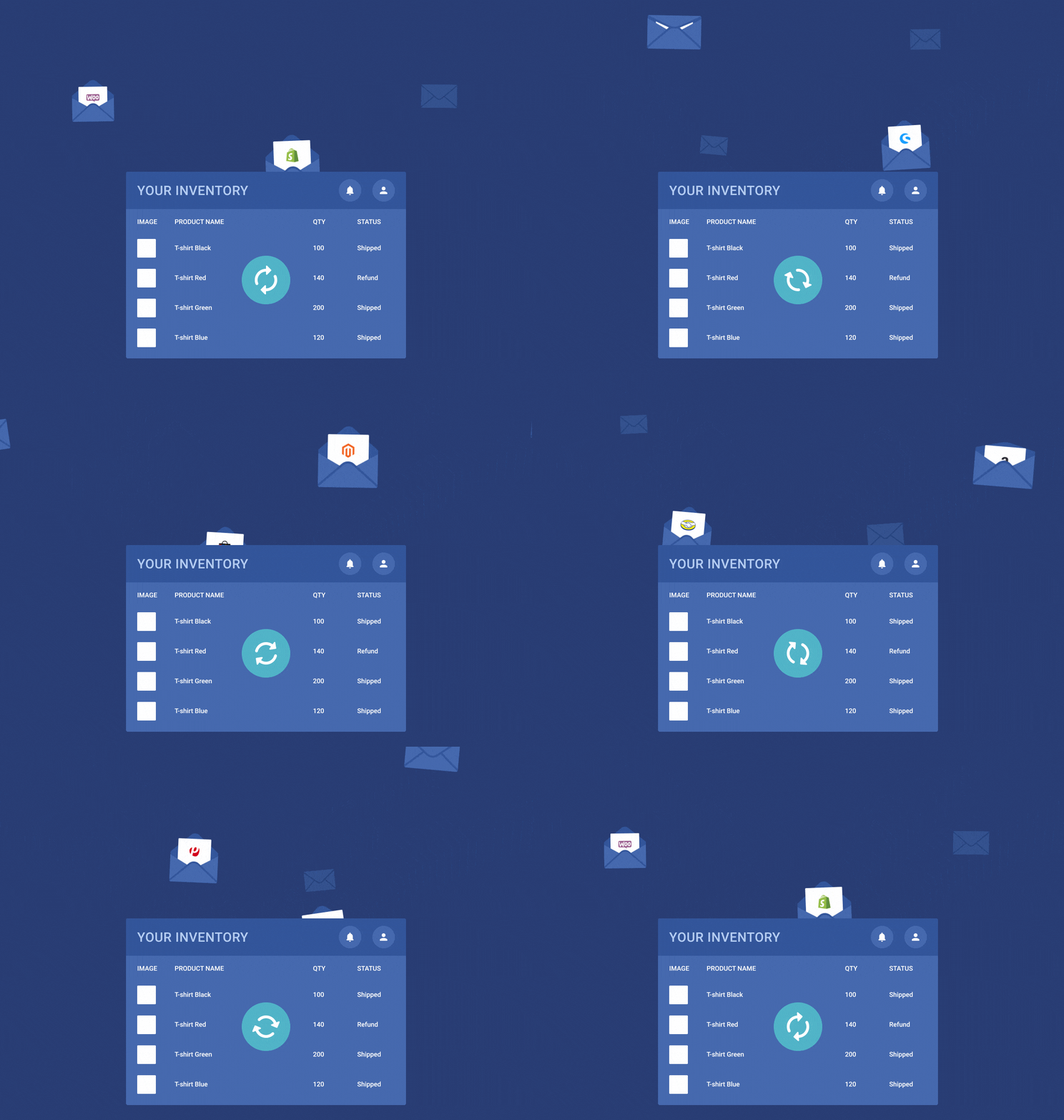
Multichannel inventory syncing options make sure that customers (and you) always have access to up-to-date info about items they're interested in buying. It likewise helps ecommerce brand names save time because it removes the requirement for them to by hand upgrade each platform with regular stock modifications.
Future-Proofing Retail Supply Chain Using Predictive InventoryThe huge 3 problems consist of: OversellingOverstockingBad consumer experience (shipping delays, flawed communications, etc) Here's a enjoyable reality: stockouts cost sellers an estimated $1 trillion each year. Additionally, roughly 8% of small companies do not track their inventory, and another 14% do it by hand. Oof. Imagine the frustration of spending numerous dollars to get a possible client to your website, and convincing them to purchase, just to falter at the last minute due to the item running out stock.
You have to rush to obtain more product. Overstocking stock might appear like the much better choice for inventory control, but it comes with its own set of issues.
Guide to Syncing High-Volume Stock Across Modern Marketplaces
All these concerns limit your capability to invest in future items and development initiatives. When stock isn't synced up throughout e-commerce channels, clients might be provided inaccurate or out-of-date info.
With a manually handled inventory system your stock is usually obsolete. It's most likely you'll make mistakes and could wind up accepting payments for something that's really out of stock. A customer may position an order on your website and expects shipment within a particular timeframe. The issue is the stock isn't in the best location to fulfill the order.
It's not just shipping delays that can trigger customer experience problems. You've also got to stress over customer interactions and marketing. When you don't have combination software to sync your various systems - ERP, 3PL, shipping and logistics, site, and marketing tools - sending out accurate messages, promos, and updates ends up being unwieldy, if not impossible.
Now let's cover the 3 key difficulties most brands encounter when first attempting to set up multichannel stock syncing. When attempting to sync inventory across several channels, there are a number of typical obstacles that individuals face. These include manual information entry, different coding for various sellers, and bidirectional syncing. Manual information entry is among the major barriers to proper stock synchronization.
Integrate Regional Pickup Nodes With Automated Online Systems
Possibly when you start offering in one sales channel like a single seller, it's simple enough to keep track of your inventory. You need to update stock counts in each ecommerce channel so it matches your warehouse platform and accounting or erp system.

Latest Posts
Navigating Global Stock Control for Modern E-Commerce
Evaluating Centralized Stock Tracking Models in 2026
Boosting Profit By Reducing Over-Selling Across Major Platforms